
Tennessee’s Sliding-Scale Tax Sale Redemption Explained
Most states give a tax-sale homeowner a flat redemption period — six months, one year, two years. Tennessee does not. Here, the window shrinks as the years of unpaid taxes pile up, and one specific category of property gets only thirty days.
If you have already received notice that your Tennessee parcel has been sold at a Chancery Court tax sale, this is the page that tells you exactly how much time you actually have. The statute is Tenn. Code Ann. § 67-5-2701, and the four tiers below are the law.

Get Your Free Cash Offer Now!
Fill out this form to get your no-obligation all cash offer started!
Get Your Free Offer TODAY!
Fill In This Form To Get Your No-Obligation All Cash Offer Started!
The Four Tiers, Plain
Under Tenn. Code Ann. § 67-5-2701, the redemption period after a Chancery Court tax sale is set based on the parcel's 'period of delinquency' — defined in the statute as the longest consecutive number of years the property taxes on that parcel have gone unpaid.
| Years of Delinquency | Redemption Window | What That Means in Practice |
|---|---|---|
| 5 years or fewer | 1 Year | From the order confirming sale. The statutory default. Most options remain available. |
| More than 5, less than 8 | 180 days | Six months from order. Enough time to evaluate a sale or redemption, not enough to wait. |
| 8 years or more | 90 days | Three months from order. The owner is in active scheduling mode immediately. |
| Vacant and abandoned | 30 days | Regardless of years. Determined by the Chancery Court per § 67-5-2701(a)(2). |
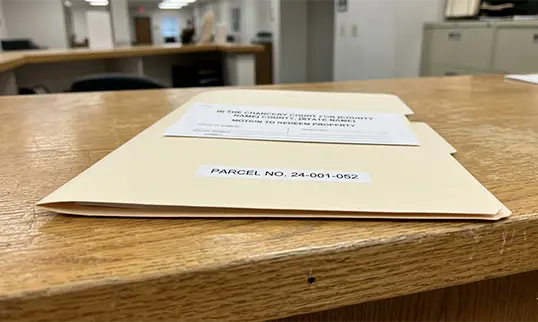
Important: the clock starts at the entry of the order confirming the sale, not at the auction itself. By the time most owners learn the order has been entered, weeks may already have run. The order entry date is the single most important date to find on the chancery court paperwork.
The 'Vacant and Abandoned' Determination
The 30-day tier deserves a careful word. Under § 67-5-2701(a)(2), the Chancery Court can determine that a parcel is vacant and abandoned based on evidence that the property is not occupied, or — for vacant land — that there is reasonable basis to believe it is abandoned, or that a court has declared it a risk to public health, safety, or welfare. When the court makes that determination, the redemption window collapses to 30 days regardless of how few years the taxes have been delinquent.
This is the rule that most often catches inherited homes in Hawkins, Carter, and Greene counties — properties that sit empty between an aging parent's move into care and the heirs' decision about what to do with the house. Cluster 3 covers this specific trap in detail.
Who Can Redeem
Under § 67-5-2701, the right to file a Motion to Redeem belongs to the former owner, the former owner's heirs, any lien holder on the property at the time of the sale, or any assignee of those redemption rights. If a parent has passed and a parcel has been tax-sold, the heir can redeem — but the heir has to know they have the right and have to act within the applicable window.
How the Math of Redemption Actually Works
To redeem, the movant must pay the full purchase price the buyer paid at the tax sale, plus interest at 12% per annum on that purchase price (running from the date the purchaser paid the clerk until the date the Motion to Redeem is filed), plus all delinquent taxes, penalties, and interest under § 67-5-2010, plus court costs. The purchaser may also file a claim for preservation expenses — recording fees, additional years' taxes paid, expenses incurred to maintain value — which the court evaluates separately.
Practical implication: redemption is almost never as cheap as just the back taxes. The 12% interest on the purchaser's bid alone can run into the thousands. Plan for the total to be substantially higher than the original delinquent-tax amount.
If Redemption Math Does Not Work
When the redemption amount is too high to fund out of pocket, the cleanest path is often a coordinated cash sale inside the redemption window. A cash buyer can fund the redemption at closing as part of the purchase. The buyer takes the property free of the tax-sale purchaser's interest; the seller walks away with the equity that is left after the redemption is paid. This is what Whitley Hamilton does, and it is faster and cleaner than most owners realize when they first hear about it.


Sell Your House in Tennessee – Get a Cash Offer Now
Selling your home doesn’t have to be hard, we offer a fast, fair cash offer with no repairs, commissions or stress. Contact us today to get started and see how easy it can be to sell your house on your terms.
Get Your Free Offer TODAY!
Fill In This Form To Get Your No-Obligation All Cash Offer Started!